
It's the last night of the month. The banking app hasn't been opened since about the 20th, and you've been side-eyeing it ever since. You know roughly what's in there. Roughly is the bit that makes your shoulders creep up towards your ears.
Ugh. Do I have to? Yes, but only for ten minutes, and you get to stop the second the timer goes. Just your app, a timer and a list to tick. GO!
The ten-minute check-in
The numbers
- ☐ Timer on, ten minutes. Phone face up where you can watch the minutes go, so you know there's an end.
- ☐ What came in. Every pay and any other money that came into your account this month, added together.
- ☐ What went out. Most apps show a monthly total. If yours doesn't, add up the big ones and stop there. Close is good enough for tonight.
- ☐ What's left. Take the second number away from the first and say it out loud, even if you mumble it.
Say $2,000 came in and $1,850 went out. That leaves $150. If your number is smaller than you hoped, or has a sneaky minus sign in front of it, write it down anyway and keep going. DO NOT STOP! Think of it as the starting line for next month, and nothing more.
The bills and the odd ones
- ☐ Every bill paid. Rent or mortgage, phone, electricity, insurance. A yes or a no for each. Missed one? Star it. Paying it, or picking a date to pay it, is job number one once the timer's off.
- ☐ Anything you don't recognise. A name you can't place, an amount that looks a bit weird. Star it and keep moving. The detective work can wait.
- ☐ The week that got away. There's usually one, where the payments bunch up like they're all queuing for their morning coffee. Note which week was the offender and keep going.
The scroll
- ☐ One slow scroll through the month. Top to bottom, once. Nosy, not cross.
- ☐ The "oh" one. The amount that made you go "oh". Mark it.
- ☐ The repeat offender. The same shop, the same app, the same delivery fee, four or five times over.
- ☐ Your favourite haunts. Look a little closer at the places you visit most. That's often where the "oh" was hiding.
Before the timer rings
- ☐ One thing to change next month. Just one. The rest can wait.
- ☐ Written where you'll see it. A sticky note on the fridge, or the top line of your phone's notes app.
- ☐ Next month's date in your phone. The last evening of the month or the first Sunday of the next, whichever you'll really remember. Set a reminder and let your phone do the remembering for you.
What your ticks are telling you
Every star on that list is a little clue, and most of them look a lot less scary once you've seen them written down.
The "oh" one is usually a small thing in disguise: a subscription you forgot you had, or a delivery fee that crept in somewhere. Cancel it and enjoy the tiny thrill.
The repeat offender shows you what you reach for most, and no telling off is needed. Give it its own allowance next month, so it stops feeling like a leak and starts feeling like something you chose.
The week that got away is usually the week you were completely wrung out. We can plan for tired weeks, can't we? So put $30 aside for next month's rough patch, so the money is tucked up in your first aid kit for when you need it.
To gather said $30, trim small amounts, $10 here and there, and you won't even notice it. You'll probably realise you can stick at this so much longer when you have some joy to look forward to at the end of a rough week. If the month was an absolute monster, choose one thing to cut anyway and let the rest sit. It'll keep. And if the timer rang before you reached the end of the list, start there next month. Half a check-in still counts. It's all about the reps, babe.
Want more room to think? These other posts of mine pick up from here:
- The longer, cosier version. The monthly money date.
- A scroll full of whim purchases. Curbing impulse spending without feeling deprived.
- No plan for next month yet. This simple budget post sets one up in an evening.
Did the month go further than you planned?
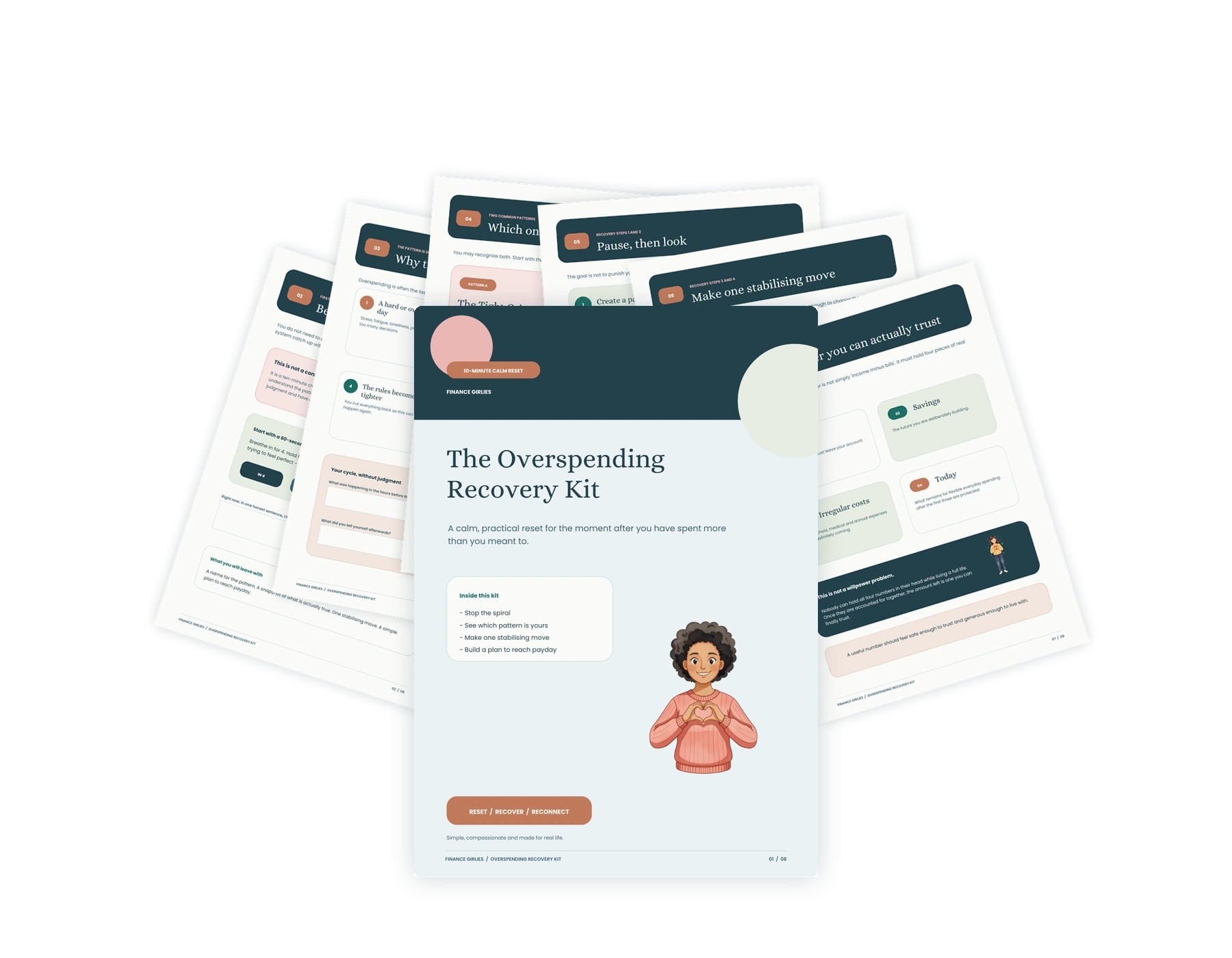
When the check-in shows more went out than you meant, the free Overspending Recovery Kit is the page for the next morning. It starts with one page for your balance, the bills due before your next payday and one thing to do about it, and it takes about ten minutes.
Get the free Overspending Recovery KitFree. Eight pages, on screen or printed.Then close it all down. The month's done, and this time you bravely looked it in the eye. You are doing so well, I'm so proud of you 🙂

This is general education, not legal, tax or financial advice.
One Comment
Comments are closed.