
It's a Thursday, and you've been the person everyone needed since about 7am.
One evening, start to finish
6pm. You get in the door and keep going. Dinner, dishes, the message you promised to answer, the form that has to be signed by tomorrow. Nobody asks how your day was, and you don't really have the words for it anyway.
8.30pm. You finally sit down. The couch, the phone, a show on that you're half watching. Your body is heavy and your head is still buzzing, and there's a flat, scraped-out feeling sitting under your ribs.
9pm. You're scrolling, and a sweater turns up. It's soft and it's the colour you've been wanting, and it's $34. You open it in another tab. Then you look at a matching scarf, then back at the sweater. Your cart is full already, and you weren't even really aware this was happening.
9.04pm. Order confirmed. There's a little lift, a warm spot in your chest. For a minute the day feels a bit less like it totally rolled you.
9.20pm. The lift has gone. The show is still on. The flat feeling is back, and now there's a small knot throbbing beside it about the money.
Friday morning. The confirmation email is the first thing on your phone. You swipe it away without opening it. Ugh, this isn't fun anymore. I don't want to know.
Nothing in that evening was silly. You had a really hard day and found the quickest way you knew to feel looked after, and for a few minutes it worked. That's exactly why it comes back: the thing that helped last time is the first thing your hand reaches for next time. But if you can change one tiny moment in that evening, the rest of it can go totally differently.
8.30pm: say the word
Before the scrolling starts, say one word for how you feel. "I feel fed up" (my fav). Identify if you are tired, lonely, bored, stressed, flat, or worried. It's so hard to catch it in the moment at first, so don't stress if you miss it. Just see if you can at least notice it.
On that particular day the word is probably tired, and maybe also a touch of frumpy grumpy. Once it's said out loud, you've got something you can work with. Tired wants rest, frumpy grumpy wants to feel hot, young and fresh, and a sweater can do none of those.
9pm: put ten minutes between the cart and the button
So instead of pressing the buy now button, wait. Leave the sweater in the cart and set a timer for ten minutes. Then give your hands a small job: fill a glass of water, fold the towels sitting on the chair. When the timer goes, check in with yourself. Has the feeling shifted, and do you still want it? We want to break the magical spell that Insta has on you at that particular moment and check in with our common sense brain (if she's around!).
If you do still want it and you've thought of a few ways it'll work, buy it. Buy it because you are CHOOSING to do so. You aren't in a mindless trance, you are deciding and that is completely different. If you are wrestling with the "we must have it now", yolo version of yourself, you might need to wait overnight (if you can bear it!)
Any calmer day: write your swaps
Make a short list in your notes app with one swap for each of your words:
- Tired could be ten minutes lying down with the lights off.
- Lonely could be a text to one friend.
- Bored could be a lap of the block with a podcast in.
- Stressed could be a hot shower.
Keep the list somewhere you'll see before you see the cart, like a pinned note at the top of the app. A few lines is plenty, and when one stops working, rewrite it.
Friday afternoon: plan the next one before it arrives
If your hard evenings tend to pile up into a big Saturday, there's a reason. You've spent the week looking after everyone else, and the weekend is the first time there's room for a treat. So decide two things before Friday ends. The first is one planned treat with a name and a number, like $30 for lunch with a friend. The second is one free thing that gives something back: a long bath, a walk somewhere pretty, an afternoon with a book and the phone in another room.
Doing one of the two still counts. By Saturday afternoon the treat is already booked in and the refill has started, so you reach the checkout already feeling a bit more looked after.
The next morning: open the email
Some evenings will still end with an order confirmed, and that's ok. You're human and not a machine, sometimes you say stuff it and give in. When it happens, open the email once. Say the amount out loud and write your word beside it: $34, tired. Now there's a number you can plan the next payday around, and a word that tells you which swap to try first next time. You can get ahead of tired, hungry, lonely you and take care of her, before she gets lost on Instagram.
The amount you spent is usually smaller and more ordinary than the knot made it feel. If it's bigger, that's useful to know too. And if a guilty pang comes along with it, my post on the pang after spending goes into where that comes from.
Want to see where the money went first?
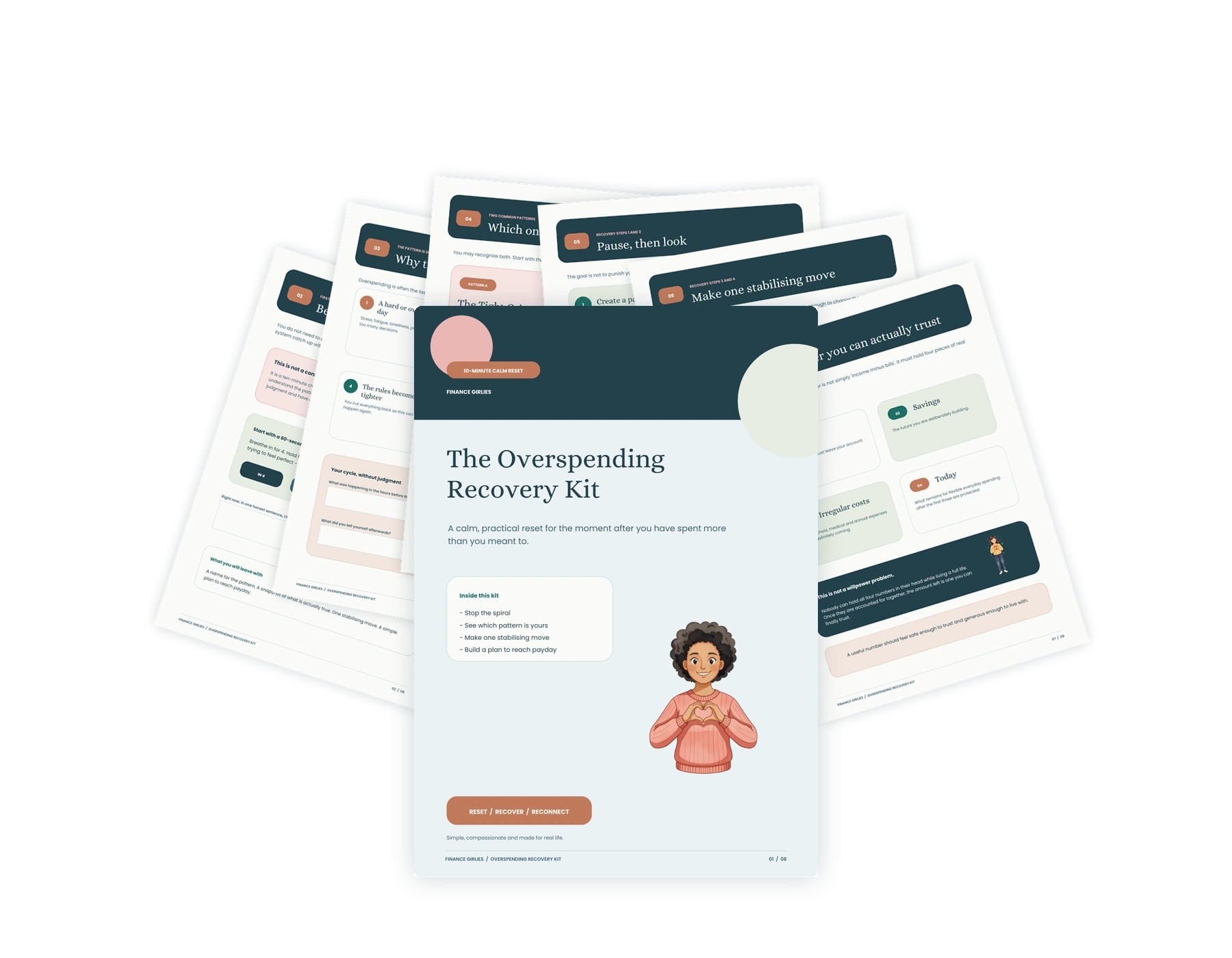
If a run of evenings like that one has cost more than you planned, the free Overspending Recovery Kit is where I'd go next. It starts with one page for your balance, the bills due before your next payday and one thing to do about it, and it takes about ten minutes.
Get the free Overspending Recovery KitFree. Eight pages, on screen or printed.And if you still want the sweater on Sunday morning, buy the sweater and be sure to enjoy wearing it.
This is general education about everyday spending, not legal, tax or financial advice, and not therapy either.
One Comment
Comments are closed.