Approved, says the card machine, and your stomach drops through the floor anyway.
It's a basket of groceries. Bread, milk, the good tea bags. You needed every bit of it, and the total was perfectly ordinary. Still, there it is: that guilty sinking feeling, and a nagging "should I have spent that?" that follows you all the way to the car.
Hang on, why do I feel like I've done something wrong? You haven't, not one bit. So let's work out why you feel guilty when you spend money, and what you can say back to that feeling.
Why the pang feels the same for $18 or $80
The pang is a bit of a drama queen. You feel it at full volume for everything. The receipt says $18, and your stomach carries on like it's a brand new car.
Because you feel it the same way for both, it's no help at all when you're deciding what to buy. Your planned spending feels just as bad as the spending you'd like to change. So you're left with that horrible churning in your tummy, even when you've done nothing wrong.
Why you feel guilty spending money in the first place
For lots of us, the pang started long before we had a card of our own. Maybe money was tight when you were small, or the adults around you counted every dollar out loud. Maybe wanting things got called selfish, and somewhere along the way it became your job to need less.
Your story might be completely different. Wherever it came from, none of it was your fault. It's just that years later, a perfectly ordinary basket of groceries can still set off that old alarm.
Notice where it gets loudest
For some of us it's the card machine. For others it's buying something for ourselves while everyone else's list is still waiting. It might be opening the banking app on a Sunday night, or tapping your card while someone is watching over your shoulder.
Think back over the last week and find the moment it got loudest. A certain shop, a certain amount, or spending on yourself in particular? Jot it on a sticky note.
It's tricky to spot at first, so don't worry if nothing jumps out straight away. Once it's written down, you'll start to see the same moments come round, like that one song the shops play on repeat.
One question at the register: was this planned?
Next time you feel the pang, ask yourself that, and only that. You decided on the groceries and the power bill long before you got to the checkout. They were PLANNED. A pang about those is just an old alarm going off, so grab the bags and keep walking.
A pang about something unplanned is worth listening to, because that might be spending you'd like a plan for. If it's the fast, late-night, one-more-tab kind, I wrote about a one-night pause for impulse spending that fits in nicely here.
Decide on a calm day, with the receipts out
Deciding ahead of time gives you something to answer the pang with. So do the deciding on a calm day, when you've got ten quiet minutes. Pick one ordinary expense that sets it off, say lunch on workdays. Get the receipts out and have a look at what it really costs you.
If it fits your money as things stand today, write one short sentence about it, such as "I've set aside $25 for lunch this week." If it doesn't fit yet, that's useful to know too, and you can change the amount without making a big song and dance about it.
Spending money on yourself, with a name and an amount
A coffee with a friend or a new craft supply is part of what makes a week feel like yours. So give those nice things a small allowance of their own.
Twenty dollars you've set aside for craft supplies feels completely different from twenty dollars you can't account for. You chose the first one. The second leaves you wondering where it went, and that's exactly when you start to feel the pang.
If you haven't got a place to write that amount down yet, this simple budget post is where I'd start.
Say it out loud in the car
When you feel the pang, answer it with the sentence you wrote. In your head works. Out loud in the car on the way home from the shops works even better (windows up, if you like): "That's the pang. This one's on my list. NEXT!"
It might not vanish straight away. But each time you answer it, it gets a little quieter.
If it's heavier than this
If the feeling is really heavy, or it goes back a very long way, a counsellor can help in ways a blog post can't. Booking that first appointment is a kind thing to do for yourself.
Before your next shop
- Pick the one ordinary purchase that sets the pang off most, and write down what it usually costs.
- Sometime this week, decide whether that amount fits, and write your sentence.
- Pop it in your purse or your phone, and take it with you to the next checkout.
Answer the pang with your real numbers
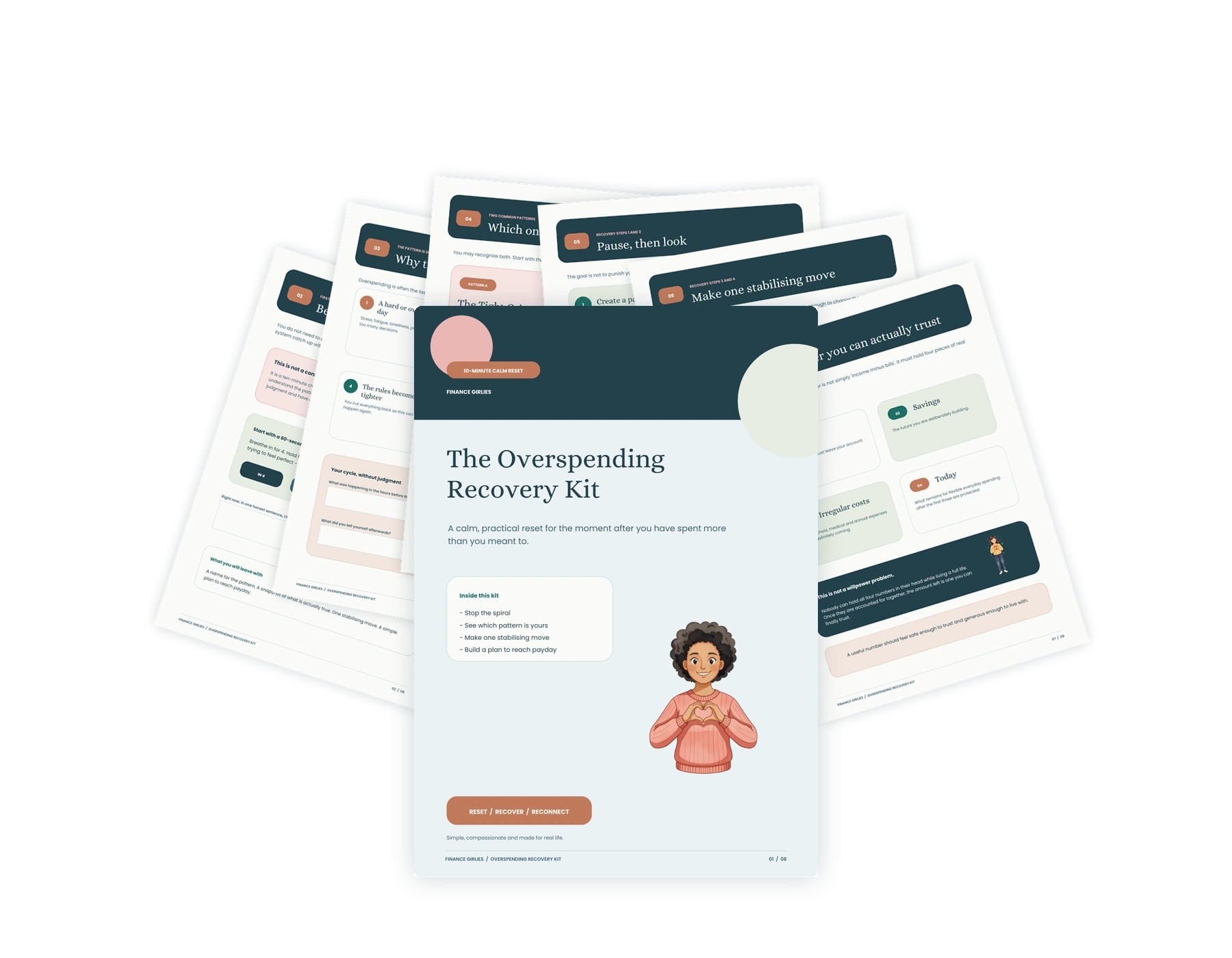
A pang is hard to answer when you can't see what's there. The free Overspending Recovery Kit starts with one page for your balance, the bills due before your next payday and one thing to do about it. Then the groceries can be checked against something real. It takes about ten minutes.
Get the free Overspending Recovery KitFree. Eight pages, on screen or printed.Next time the machine beeps, you'll have something to say back. You're doing beautifully.
This is general education about everyday spending, not legal, tax or financial advice, and not therapy either.
One Comment
Comments are closed.