
The car starts making a new noise on a Tuesday. Clunk, clunk, clunk. The mechanic says $200, and you stand at the counter with your stomach sinking, doing the sum in your head: the card, the grocery money, or next week's pay? Seriously? This week?
Now picture the same counter with $200 already set aside. You hand it over and get on with your day, and the card and the grocery money stay right where they were. That's what an emergency fund is for, and you can start one this month, even if there's absolutely nothing in savings right now.
What is an emergency fund for, really?
Mostly, it's for life's ordinary surprises: the car repair, or the vet visit nobody planned. Your first emergency fund (some people call it a starter emergency fund) only has to cover the next one of those. The big scary disasters can wait for a bigger emergency fund later, if you ever want one.
Without an emergency fund, the $200 goes on the card, and you're still paying for that repair next month, on top of whatever else turns up, and it all snowballs from there. With an emergency fund, the repair is paid and done, and next month starts with just next month's bills. Much nicer, right?
How much should be in an emergency fund?
Less than you've been told, I promise. The best guide is your own last year of surprises. Search your card or bank statements for words like "repair" and "vet", and jot down what you find. It's a little bit of snooping, that's all.
If the search comes up empty, have a think back over the year. What went on the card that you'd have paid for differently if the money had been sitting there waiting? For example, say your year had a $200 car repair, a $90 vet visit and a $60 pharmacy trip. That's $350.
Your numbers will be different, and whatever yours add up to becomes your first target. Bigger goals can come later if you want them. For now, it's just that one number.
Isn't $350 too small to bother with?
Nope. $350 covers that whole car repair at the top of this page, and you get to walk out of the mechanic's without touching the card. Imagine that feeling!
Most of the advice out there tells you to save three to six months of expenses. That's a lovely goal for one day, but when you're starting from zero it's so far away that this month's $25 feels completely pointless. Why even bother? Put that same $25 next to $350, though, and you can see yourself getting there.
Where should I keep my emergency fund?
In a savings account that's separate from the one you spend from, ideally one you can get to within a day or two. Then give it a name like "Just in case", so every time you open the app you know exactly what that money is for (and exactly what it isn't for!).
Keeping it apart means you won't nibble away at it by accident in a chaotic week. A boring old savings account at your own bank is perfect, and nothing fancier is needed.
How do I build it when money's tight?
Start with an amount that won't make the groceries tighter. For example:
- $50 each payday adds up to $350 after seven paydays.
- $25 each payday takes 14 paydays.
- $10 is what fits right now? It still counts, and you can bump it up when there's room.
Schedule the transfer for the day after payday, so the money is tucked away before you've even thought about spending it. Set it up once, and then you can forget about it.
And if one payday is tight, skip the transfer that time and let the groceries win, because nobody saves well on an empty fridge and a hungry belly.
What if I have to use it?
Then it did exactly what it was there for! Spending it on the vet is your emergency fund doing its job, and it doesn't mean anything bad about you. Not one thing.
Start filling it up again on the next payday that has a bit of wiggle room in it, at whatever amount fits that week. Some months it'll dip before it climbs again, and that's completely normal for an emergency fund that's out there doing its thing.
What if I miss a few paydays?
Pick it up on the next one. You might be thinking, well, that's that then, I've blown it. You haven't. Paydays slip by when life is a shambles, and every dollar you've already put in is still sitting right there. The transfer can start again the morning after your next pay.
Where does the money for it come from?
From what's left after the bills, which is much easier to spot once you can see it in front of you. Two of my other posts can help with that:
- To see what's left each pay. My post on a simple budget you'll actually use helps you pick your transfer amount from a real figure instead of a hopeful guess.
- To watch it grow. A 15-minute monthly money date is a nice moment to peek at how your emergency fund is coming along.
What do I do tonight?
Only the first one has to happen tonight. If the evening gets away from you after that, the other two can wait for the weekend.
- Add up last year's surprisesOpen your last few statements and search for "repair", then "vet". Write down the total. That's your first target.
- Open or name the accountChoose a savings account apart from your everyday one, and give it a name that makes you smile.
- Schedule the transferPick an amount that fits your pay, and set it for the day after payday.
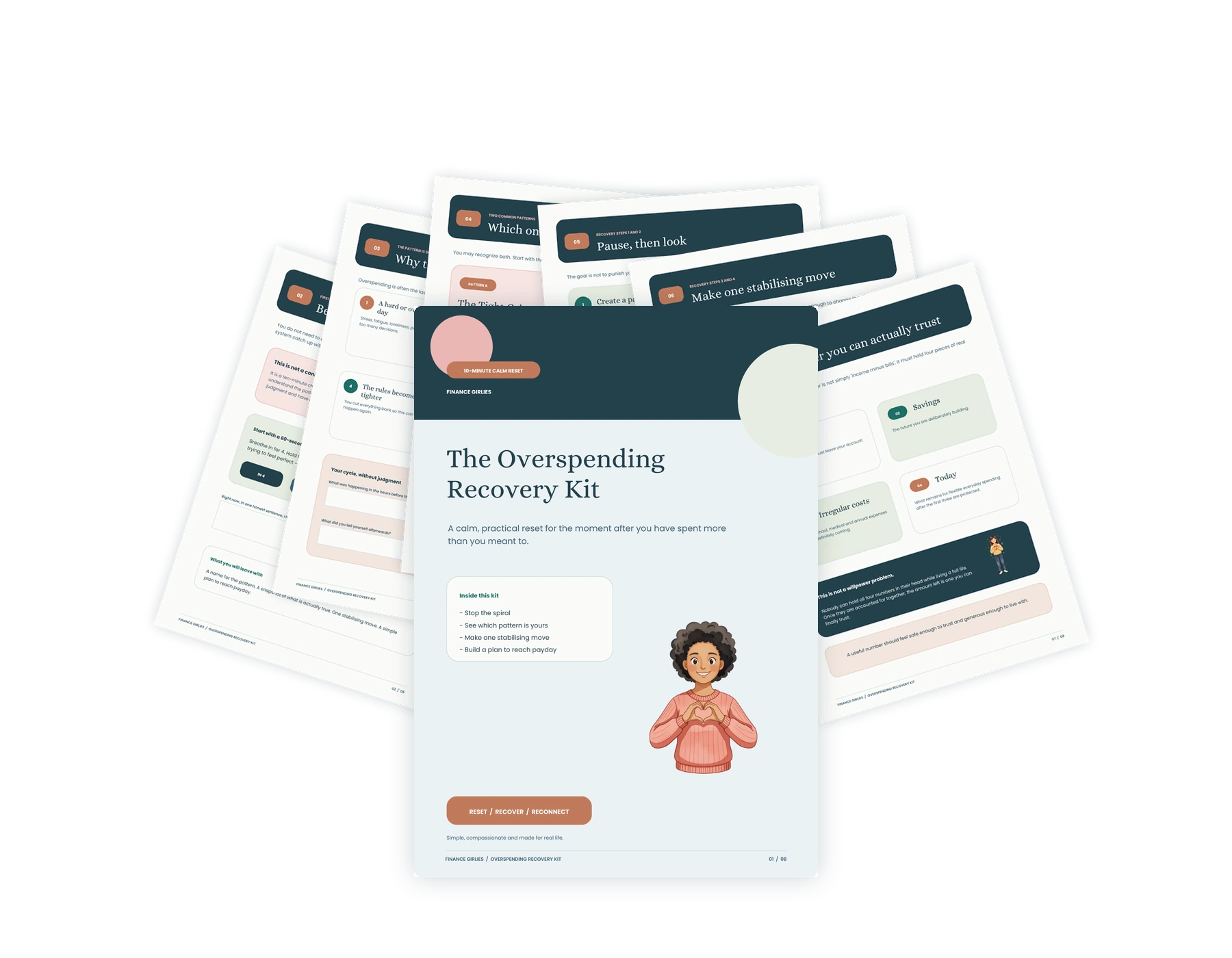
Did a surprise land before your emergency fund did?
The free Overspending Recovery Kit is for getting through to the next payday. It starts with one page for your balance, the bills due before your next payday and one thing to do about it, and it takes about ten minutes.
Get the free kitFree. Eight pages, on screen or printed.And the next time the car starts clunking, you can roll your eyes, pay the $200 out of your emergency fund and drive home with the groceries untouched. Good on you for getting ahead of it.

This is general education only, not financial, tax or legal advice.
4 Comments
Comments are closed.