
What to Do When Bills Are Piling Up: A Step-by-Step Action Plan
The unopened envelopes are stacked on your kitchen counter. Your phone keeps buzzing with payment reminders you’ve been ignoring. That familiar weight sits in your chest—part anxiety, part shame, part “how did I get here again?”
If bills are piling up and you’ve been playing financial hide-and-seek, you’re not alone. You’re also not the first woman to find herself here, and you definitely won’t be the last.
Here’s what I want you to know right now: hiding from bills doesn’t make them disappear, but it does make everything harder. The good news? Taking control—even when it feels overwhelming—is completely possible with the right action plan.
Let’s turn that pile of stress into a manageable, step-by-step plan that gets you back on solid ground.
First Things First: You’re Not Broken (And This Isn’t Forever)
Before we dive into practical steps, let’s address the elephant in the room—that voice in your head saying you’re terrible with money, that you should have this figured out, that everyone else manages just fine.
That voice is lying.
According to the Australian Bureau of Statistics, over 3.2 million Australians experienced financial stress in 2022. The Salvation Army reports that 1 in 4 Australians have skipped meals to pay bills. Financial difficulties touch people across all income levels, ages, and backgrounds.
Common reasons bills pile up:
- Job loss or reduced hours
- Unexpected medical expenses
- Relationship changes (divorce, separation)
- Mental health challenges affecting daily functioning
- Interest rate rises or rent increases
- Simply losing track during busy life periods
None of these make you a failure. They make you human.
The cost of avoidance: When we avoid dealing with bills, several things happen:
- Late fees accumulate (often $10-50 per missed payment)
- Credit ratings suffer (which affects future borrowing)
- Stress compounds (avoidance creates more anxiety, not less)
- Options decrease (early contact gives you more choices)
- Simple problems become complex (a $200 bill can become a $500 problem)
But here’s the empowering truth: every day you avoid dealing with this, you’re choosing anxiety over action. Today, you can choose differently.
The Psychology of Bill Overwhelm (And Why Your Brain Wants to Hide)
Understanding why bill stress feels so overwhelming can help you be gentler with yourself—and more effective in your response.
Why bills trigger our nervous system:
- Survival threat response: Our brain interprets unpaid bills as a threat to basic needs (shelter, food, safety)
- Shame spiral activation: Bills often trigger deeper feelings about self-worth and capability
- Analysis paralysis: Too many urgent things create mental gridlock
- Perfectionism trap: If you can’t pay everything perfectly, your brain says don’t pay anything
The hiding cycle:
- Bills arrive → anxiety spikes
- Anxiety feels unbearable → avoidance begins
- Avoidance provides temporary relief → reinforces the behavior
- Bills accumulate → anxiety increases
- Increased anxiety → more avoidance
- Cycle repeats and intensifies
Breaking the cycle: The only way out is through—but “through” doesn’t have to mean diving into the deep end. It means taking the smallest possible step toward clarity and action.
Step 1: The Brain Dump (Get Everything Out of Your Head)
When bills are scattered across your kitchen counter, your email inbox, and your worried thoughts, your brain can’t process them effectively. The first step is creating one clear picture of what you’re actually dealing with.
Create Your Bill Reality List
Find a quiet 30 minutes and gather:
- All unopened mail
- Your phone (for emails and text reminders)
- A notebook or the notes app on your phone
- A calculator
- A cup of tea or whatever brings you comfort
Don’t judge, just document:
Create a simple table with these columns:
- Bill/Company Name
- Amount Due
- Due Date
- Days Overdue (if applicable)
- Consequence of Non-Payment (essential service cut-off, late fee, etc.)
Example:

Include everything:
- Utilities (electricity, gas, water)
- Rent or mortgage
- Insurance premiums
- Credit card minimums
- Phone and internet
- BNPL payments (Afterpay, Zip, etc.)
- Personal loans
- Any other recurring bills
If opening mail feels too overwhelming: Start with just your banking app and phone notifications. You can add physical mail later—progress over perfection.
Calculate the Real Numbers
Once everything is listed:
- Total amount owed: Add up all the bills
- Total available funds: Check all your accounts (even that forgotten savings account with $37)
- The gap: How much are you short?
Seeing the real numbers often reveals that the situation is either better or more manageable than your anxiety made it seem.
Step 2: Prioritise Like Your Life Depends on It (Because Your Wellbeing Does)
Not all bills are created equal. When you can’t pay everything, you need a clear priority system that protects your basic needs first.
Priority Level 1: Essential Services (Pay These First)
- Housing: Rent/mortgage (eviction prevention)
- Utilities: Electricity, gas, water (basic living needs)
- Food: Grocery money, not restaurant bills
- Transportation: Car payments/registration if needed for work
- Essential medication: Health comes first, always
Priority Level 2: Important but Not Immediate
- Phone/Internet: Important for work and safety, but usually get warnings before cut-off
- Insurance: Important long-term, but missing one payment rarely causes immediate problems
- Minimum credit card payments: Prevents credit damage
- Government payments: Tax debts, Centrelink overpayments
Priority Level 3: Everything Else
- BNPL services: Often have smaller consequences
- Subscription services: Netflix won’t ruin your credit rating
- Personal loans from family/friends: Usually more flexible (but don’t damage relationships)
- Non-essential services: Gym memberships, streaming services
Mark your list: Go through your bill reality list and mark each item as Priority 1, 2, or 3.
The Triage Strategy
If you can pay all Priority 1 bills: Great! Move to Priority 2.
If you can’t pay all Priority 1 bills: Focus only on these. Everything else waits.
If you can’t even cover Priority 1: This becomes a crisis plan (we’ll cover this below).
Remember: choosing to pay your electricity bill instead of your credit card minimum isn’t failing—it’s intelligent prioritisation.
Step 3: Contact Your Providers (Yes, Really—And Here’s How)
This is the step most people avoid, but it’s also the most powerful. Early contact with your bill providers can transform your options and reduce your stress dramatically.
Why Calling Actually Helps
Companies want to avoid bad debt: It costs them more to chase unpaid bills than to work with you on a payment plan.
You have legal protections: Australian Consumer Law requires essential service providers to offer hardship programs.
Early contact = better options: Calling before you’re 30+ days overdue gives you more choices.
It stops the anxiety spiral: Taking action, even uncomfortable action, reduces stress more than continued avoidance.
What to Say (Script Templates)
For essential services (utilities, phone): “Hi, I’m calling about my account [account number]. I’m experiencing financial difficulty and won’t be able to make my full payment by the due date. I’d like to discuss payment options or hardship programs available.”
For credit cards: “I’m calling about my credit card ending in [last 4 digits]. Due to temporary financial hardship, I’m unable to make my minimum payment this month. Can you tell me about hardship programs or temporary payment arrangements?”
For other bills: “I’m calling about my account with you. I’m going through a tough financial period and need to discuss extending my payment date or setting up a payment plan. What options do you have available?”
What They Might Offer
Payment extensions: Extra time to pay (usually 1-4 weeks)
Payment plans: Breaking large bills into smaller amounts over time
Hardship programs: Temporarily reduced payments or payment holidays
Bill smoothing: Spreading annual costs (like insurance) across monthly payments
Concessions: Discounts if you’re eligible for government concessions
Interest rate reductions: Temporary lower rates on credit cards
Before You Call: Be Prepared
Have ready:
- Your account numbers
- A realistic idea of when you could make payments
- Information about your hardship (job loss, medical bills, etc.)
- Your weekly/monthly budget breakdown
Know your rights:
- You cannot be disconnected from essential services without proper notice
- Hardship programs are required by law for essential services
- You have the right to make a complaint if you’re not offered appropriate assistance
If Phone Calls Feel Too Scary
Try online chat: Many companies now offer live chat options
Email customer service: Slower but less anxiety-provoking for some people
Visit in person: Some prefer face-to-face conversations
Bring support: Ask a trusted friend to sit with you during calls
Remember: the customer service person wants to help you find a solution. They’re not there to judge your situation.
Step 4: Create Your Emergency Payment Plan
Now that you know what you owe, what’s most important, and what your providers can offer, it’s time to create a concrete plan that gets you through this crisis period.
The 30-Day Survival Budget
Focus only on what you need to survive the next month:
Essential expenses only:
- Rent/mortgage payment
- Minimum groceries (aim for $50-80/week)
- Essential utilities (electricity, water)
- Transportation to work
- Essential medications
- Phone (basic plan only)
Calculate weekly: Break monthly amounts into weekly targets for easier management.
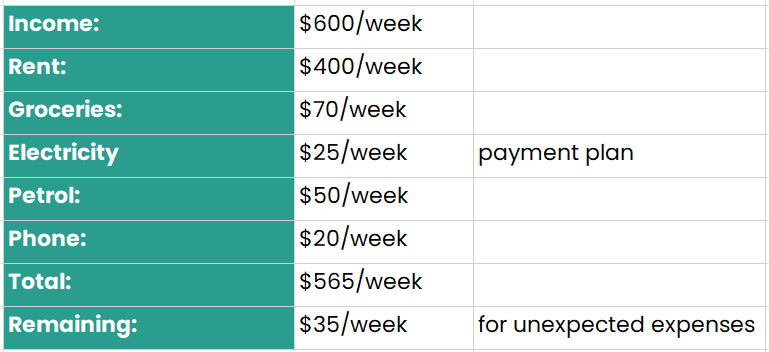
Example 30-Day Crisis Budget:
Your Payment Strategy
Based on your priority list and provider conversations:
Week 1: Pay Priority 1 bills with agreed extensions
Week 2: Contact Priority 2 providers for payment arrangements
Week 3: Make first payments on any payment plans you’ve arranged
Week 4: Reassess and plan for the following month
Track Your Progress
Create a simple tracker:
- Bill paid: ✓
- Extension arranged: ✓
- Payment plan set up: ✓
- Next action required: [date and what to do]
Checking things off gives you a sense of progress and control, even when everything feels chaotic.
Step 5: Prevent Future Bill Overwhelm
Once you’ve stabilised the immediate crisis, it’s time to put systems in place so this doesn’t happen again.
Set Up Bill Automation (The Right Way)
Not recommended: Automatic payments from your main account (can cause overdrafts)
Better approach: A separate “bills account” with automated transfers
How it works:
- Calculate your monthly bills total
- Open a separate savings account just for bills
- Set up automatic transfer from your pay to this account
- Set up automatic payments from this account to your bills
- Check the account weekly to ensure it’s tracking properly
Create Bill Buffer Money
Start small: Even $50 in your bills account as a buffer
Build gradually: Add $10-20 each week until you have one month’s buffer
Use it wisely: Only for genuine bill emergencies, not lifestyle extras
Monthly Bill Date
Similar to your monthly money date, schedule 15 minutes each month to:
- Check all bills have been paid
- Review any changes in bill amounts
- Update your bills account transfer amount if needed
- Catch any issues before they become crises
Warning Sign System
Create alerts for yourself:
- Yellow alert: Bills account drops below one week of expenses
- Red alert: Any bill goes unpaid for more than one week
- Crisis alert: Can’t cover Priority 1 expenses
Having a system helps you catch problems early instead of sliding into crisis mode.
When Bills Become a Bigger Financial Crisis
Sometimes bill problems are symptoms of a larger financial crisis that needs professional help.
Seek Help If:
- Your monthly essential expenses exceed your income consistently
- You’re borrowing money to pay basic bills regularly
- You have multiple defaults on your credit file
- You’re avoiding opening bills for more than two months
- The stress is affecting your mental health severely
- You have no income and limited savings
Free Australian Resources:
- National Debt Helpline: 1800 007 007 (free financial counselling)
- MoneySmart: moneysmart.gov.au (ASIC’s free financial guidance)
- Financial Counselling Australia: www.financialcounsellingaustralia.org.au
- Emergency relief services: Contact local Salvation Army, St Vincent de Paul, or Red Cross
Professional Help Options:
- Financial counsellors: Free service to help with debt management
- Accountants: For complex tax or business-related financial problems
- Financial planners: For longer-term financial strategy (once crisis passes)
Remember: asking for help isn’t failing—it’s being smart about getting the support you need.
Real Talk: The Emotional Side of Bill Stress
Let’s acknowledge something important: dealing with overdue bills isn’t just a practical challenge—it’s an emotional one too.
Common Feelings (All Normal):
- Shame: “I should be better at this”
- Fear: “What if I lose my home/car/power?”
- Overwhelm: “There’s too much to deal with”
- Isolation: “No one else struggles like this”
- Anger: “Why is everything so expensive?”
Gentle Reminders:
- Financial struggles are temporary: This situation will change
- You’re taking action: That makes you brave, not broken
- Small steps count: You don’t have to fix everything at once
- Support exists: You don’t have to handle this alone
- Tomorrow is different: Each day brings new possibilities
Self-Care During Financial Crisis:
- Maintain routines: Keep doing things that ground you (walks, showers, regular meals)
- Limit social media: Seeing others’ highlight reels can worsen financial comparison
- Talk to safe people: Choose one trusted person who can offer support without judgment
- Practice basic self-compassion: Speak to yourself like you would a dear friend
- Celebrate small wins: Paid one bill? Made one phone call? That’s progress worth acknowledging.
Creating Your Action Plan Right Now
Here’s your immediate to-do list for the next 48 hours:
Today:
- [ ] Create your bill reality list (30 minutes)
- [ ] Calculate total owed vs. available funds
- [ ] Mark each bill as Priority 1, 2, or 3
- [ ] Choose which Priority 1 bill to tackle first
Tomorrow:
- [ ] Make your first phone call to one provider
- [ ] Set up one payment arrangement
- [ ] Plan when to contact the next provider
- [ ] Celebrate taking action (seriously—acknowledgment matters)
This Week:
- [ ] Contact all Priority 1 providers
- [ ] Set up any available payment plans
- [ ] Make first payments according to your new arrangements
- [ ] Start planning for next month’s bills
Remember: you’re not aiming to solve everything perfectly—you’re aiming to take the next right step.
Your Bills Don’t Define Your Worth
Here’s what I want you to remember as you work through this process:
Overdue bills don’t make you a bad person. They make you someone dealing with challenging circumstances who’s brave enough to take action.
Financial crises are usually temporary. Jobs change, incomes improve, unexpected money arrives, payment plans end—situations shift.
Every phone call you make is an act of courage. Reaching out when you’re struggling takes real strength.
Small payments still matter. Even $10 toward a bill shows good faith and keeps doors open for more help.
You’re not alone in this. Thousands of Australians are making similar phone calls, creating similar payment plans, and working through similar challenges.
Taking action reduces anxiety. Even when the action feels scary, it’s almost always less stressful than continued avoidance.
Ready for a Complete System?
If you found this action plan helpful but want additional support for managing your finances through difficult times, consider The Fierce Financial Planner. It includes a complete “Can’t Pay Bills Plan” worksheet, debt tracking pages, and monthly check-in systems designed to help you stay on top of your finances even when life gets overwhelming.
The planner also includes emergency fund trackers, gentle savings challenges, and mindset work to help prevent future bill crises—all created with the same understanding and non-judgmental approach you’ve found in this article.
Frequently Asked Questions
Q: What if I can’t afford to pay anything toward my bills right now? A: Contact your providers anyway. Many have emergency hardship programs that can pause payments temporarily. Even explaining your situation buys you time and shows good faith. Don’t wait until you have money to make contact.
Q: Will contacting my providers hurt my credit rating? A: No, contacting providers to arrange payment plans usually helps protect your credit rating. It’s much better than letting bills go to default. Missing payments without contact is what damages credit ratings.
Q: How long do I have before essential services get cut off? A: In Australia, essential service providers must give you proper notice (usually 5-10 business days) and offer payment plans before disconnection. Contact them as soon as you know you’ll struggle to pay.
Q: Should I use credit cards or personal loans to pay bills? A: This can help in the short term but creates bigger problems later. Only do this if you have a concrete plan to pay off the credit card debt quickly. Often payment plans with providers are better than adding debt.
Q: What if my provider won’t help or offer payment plans? A: Essential service providers are required by law to offer hardship assistance. If they refuse, ask to speak to a manager or contact the industry ombudsman (Energy and Water Ombudsman, Telecommunications Industry Ombudsman, etc.).
Q: How do I rebuild after getting through a bill crisis? A: Start with small wins—set up a bills-only savings account, automate what you can, and practice your monthly money check-ins. Focus on preventing the next crisis rather than perfecting your current situation.
Remember: taking action on overdue bills is always better than continued avoidance. You’ve got the tools now—trust yourself to use them. You’re stronger and more capable than your current circumstances might make you feel. 💕