"Money doesn't grow on trees." Most of us heard that one before we could count to ten. And some of us still hear it, word for word, every time we pick up something for ourselves.
In my house it was "make it last". That was mostly about the nice food in the pantry, especially the orange juice and the muesli bars. And money itself? Never talked about. But you could feel it: tense, hushed, a real do-not-go-there kind of vibe. Maybe your house had its own version.
That's the funny thing about the money patterns we inherit. We soak them up from everywhere: parents and grandparents, a friend's kitchen, the telly, an ad that played a hundred times. And nobody ever asked whether we wanted to keep them!
You don't have to work out exactly where yours came from (but I'm sure you know!), or who said it first. What matters is what that old saying does to you now, at the checkout or when a bill lands, and what you'd say instead.
Here are six of the most common money beliefs. See how many sound a little too familiar.
"Money doesn't grow on trees."
What it does now. You hear it at the checkout, but only when the thing is for you. Buying for a friend, a niece or the office collection? Easy. The same jeans for you, though, and suddenly it feels like you're taking something you haven't earned.
So back they go on the rack, or home they come with a heavy feeling all the way to the car.
Try saying. "Some of this money is for me, on purpose."
Try this. Pick an amount for you this pay, say $15, and write down what it's for before you spend it. Now it's a plan you made, so when you get to the till you can just enjoy it.
"We can't afford it."
What it does now. You've decided there's no money before you've even looked. It might be sitting right there, but your first thought is "there isn't any", so you leave the banking app closed. Why look when you already know the answer?
Try saying. "Let me see what's really here today."
Try this. Open your account, say the balance out loud, and name one bill it covers. Now you're going on what's really in there today, and that old saying can take a back seat.
"We don't talk about money."
What it does now. If money was a hushed, don't-go-there subject when you were growing up, no wonder you've ended up dealing with it on your own and in a rush. Or not dealing with it at all!
A bill arrives and you pop the envelope by the door, where it sits for a week, because you're pretty sure opening it can only end badly.
Try saying. "I can look for two minutes, then stop."
Try this. Set a timer for two minutes, have a look, and close the app when it rings. Stopping is allowed, and it's exactly what makes opening it next time a little easier.
"Spend it while you've got it."
What it does now. Money sitting in the account feels strange, almost exposed, like it won't last anyway. So out it goes, quick smart, and that familiar zero comes back. For some of us, it's the only time we properly relax.
Try saying. "A little bit can wait for later."
Try this. On payday, move $10 somewhere separate and leave it there for a month. Ten dollars is small on purpose. You're practising letting money stay put, and you can bump it up once that feels normal.
"Some people are just good with money."
What it does now. You quietly file yourself in the other group. Every missed bill or blown-out week becomes "proof", and every good week gets brushed off as luck.
Try saying. "I'm still learning how my money works."
Try this. Write down one money thing you handled this week, even if it was one bill paid on time. Add another next week. Before long you've got a whole list, and that old saying starts to sound a bit silly.
"A penny saved is a penny earned."
What it does now. Plot twist: this one might be on your side. Checking prices and paying the important bills first came from somewhere, and they're well worth keeping. It only needs a new line if it's grown into saving everything and enjoying none of it.
Try saying. "Careful, and a little bit for me."
Try this. Name one careful habit you're proud of, out loud. Then pair it with the $15 from the first saying, so you've got a bit of both.
Where to start with your money patterns
Pick the saying that trips you up the most right now. Just one! For the next month, each time it pops up, say your new line and do your small thing. That's so much easier to keep going with one saying than with six. And if a week slips by, pick it up again on your next payday.
The old saying
Money doesn't grow on trees
We can't afford it
We don't talk about money
Spend it while you've got it
Some people are just good with money
A penny saved is a penny earned
What you could say instead
Some of this money is for me, on purpose
Let me see what's really here today
I can look for two minutes, then stop
A little bit can wait for later
I'm still learning how my money works
Careful, and a little bit for me
And a lovely bonus: anyone younger who watches you handle money will hear how you respond too.
If you'd like a bit more help, these other posts are a good next step:
- A monthly check-in. A monthly money date is a nice time to see how you're going with your saying.
- That pang after spending. If you feel that old saying as a pang after you've spent, my post on why spending can feel so bad goes deeper.
- A home for the $15 and the $10. You can plan for both of them every month with a simple budget.
Want to see the saying in your numbers?
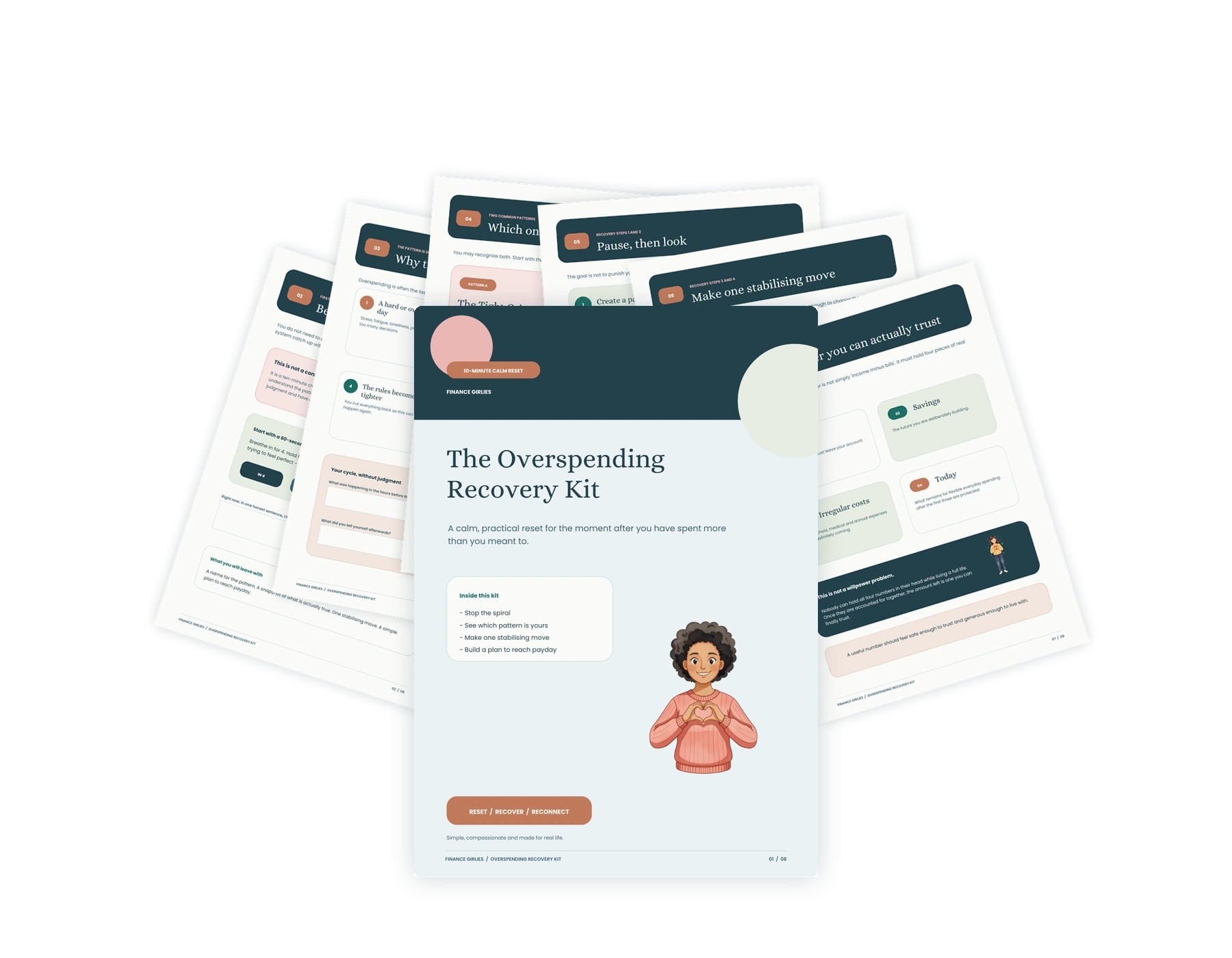
If yours shows up as spending more than you meant to, the free Overspending Recovery Kit is where I'd go next. It starts with one page for your balance, the bills due before your next payday and one thing to do about it, and it takes about ten minutes.
Get the free Overspending Recovery KitFree. Eight pages, on screen or printed.So next time you're at the till with something just for you, and you hear that old voice say "make it last" or "money doesn't grow on trees", you'll know exactly what to say back. Smile, say your new line, and enjoy every bit of it, my lovely.
This is general education about everyday money, not legal, tax or financial advice, and not therapy either.
One Comment
Comments are closed.