
It's 10:47pm and there's something sitting in your online cart. You only opened the app to look at one small thing. Now there are four tabs open and a very persuasive little voice whispering that it's practically a bargain. At that price it'd be silly not to, right?
Your thumb is hovering over the button and your eyelids keep drooping. You've been running on fumes since lunch, and what you're after is the little lift you'll get when you press buy.
A bit of relief, a bit of reward, a scrap of control after a long day where you didn't get a say in anything. Two taps, and you'll feel better for about a minute.
That's why "just use more willpower" was never going to stop impulse spending. Willpower is usually the first thing to run out on a tired night, so let's give 10:47pm you some help that doesn't depend on it.
And nothing here is banned, because the minute something's off limits you want it twice as much. Anyone who's been told not to eat the last biscuit knows exactly how that goes.
The overnight rule: leave it in the cart and go to bed
The first thing I'd try tonight is also the dullest. Leave it where it is, close the app and go to sleep. The cart will hang onto it for you, it's not going anywhere. Phone on the charger, face down. BED! Tomorrow you look again with a clearer head, and if it's still a yes, you buy it.
It's funny how many things look a bit meh over your morning coffee. Some of them still look great, and those are the ones worth buying.
Give the fun some money of its own
If it's still a yes in the morning, the money for it needs to come from somewhere. When every spare dollar is meant to be saved, every treat feels like you're sneaking around behind your budget's back. That's how a $12 purchase turns into a grumpy little cloud that follows you around all evening.
So give the fun a line of its own. Pick an amount that feels a bit generous to you, say $25 each payday, and call it fun money. When it's spent, it's spent.
Until then you can buy the thing and enjoy it, no sorry needed, because you chose that amount on a day when you were wide awake and thinking straight.
If you don't have a budget to put it in yet, this simple budget post starts with one payday and builds from there.
Make impulse buying take longer than wanting
Online shopping is designed so there's about two seconds between wanting something and paying for it. Sneaky, right? So stretch that gap:
- Take your saved card out of the apps, so paying means hauling yourself off the couch and digging through your bag for your wallet. By the time you've found it, the want has often fizzled out.
- Unsubscribe from the sale emails that land at 9pm (they're very good at their job!). Each one you remove is one less nudge arriving right when you're most tired.
Notice which nights it happens
Some nights closing the cart is easy and some nights it isn't, and it usually comes down to the kind of evening you've had.
Open your card app and scroll back through your last ten purchases. Next to each impulse buy, jot one word for what was going on just before: tired, bored, lonely, celebrating, or doom-scrolling when you could have been asleep.
You don't need to add anything up, and nobody is marking it. I'd bet two or three of those words turn up again and again. Once you know which ones are yours, those late-night buys start to make a lot more sense.
You'll start to spot the frazzled, end-of-a-long-day version of you coming a mile off, and you can have something better waiting for her.
Have something else ready for the lift
If it was really the lift you were after, find it somewhere else:
- For comfort, clean sheets or ten minutes in the sun can do a lot of what the parcel was meant to do.
- For something new, take a different walk or start the book beside your bed.
- For a bit of control back, clear one small surface or decide on tomorrow's breakfast.
Pick the two you'd really enjoy and save them in the notes on your phone. Keep it short, because at 10:47pm you won't read past the first two lines. Spending can stay on the menu, it just doesn't have to carry every hard day on its own little shoulders anymore.
And some nights you'll press buy anyway. That's ok. Nobody gets this right every single night, and tomorrow you just pick up where you left off.
If a pang follows even your ordinary purchases, like the groceries or a bill, my post on why spending can feel so loaded goes into where that comes from.
Check in once a week, for two minutes
Tracking every cent for a month is a big ask (and who has the energy for that?), so keep this tiny. Once a week, look at one thing: how much of your fun money is left. If you bought something on impulse that week, jot your one word next to it, like before.
I'd rather you looked for two minutes once a week than gave up after two weeks of ticking boxes. If a week gets away from you, that's ok, pick it up the next one and carry on. After a month or two you'll see which nights keep turning up, and those are the ones I'd make a plan for first.
Spent more than you meant to this week?
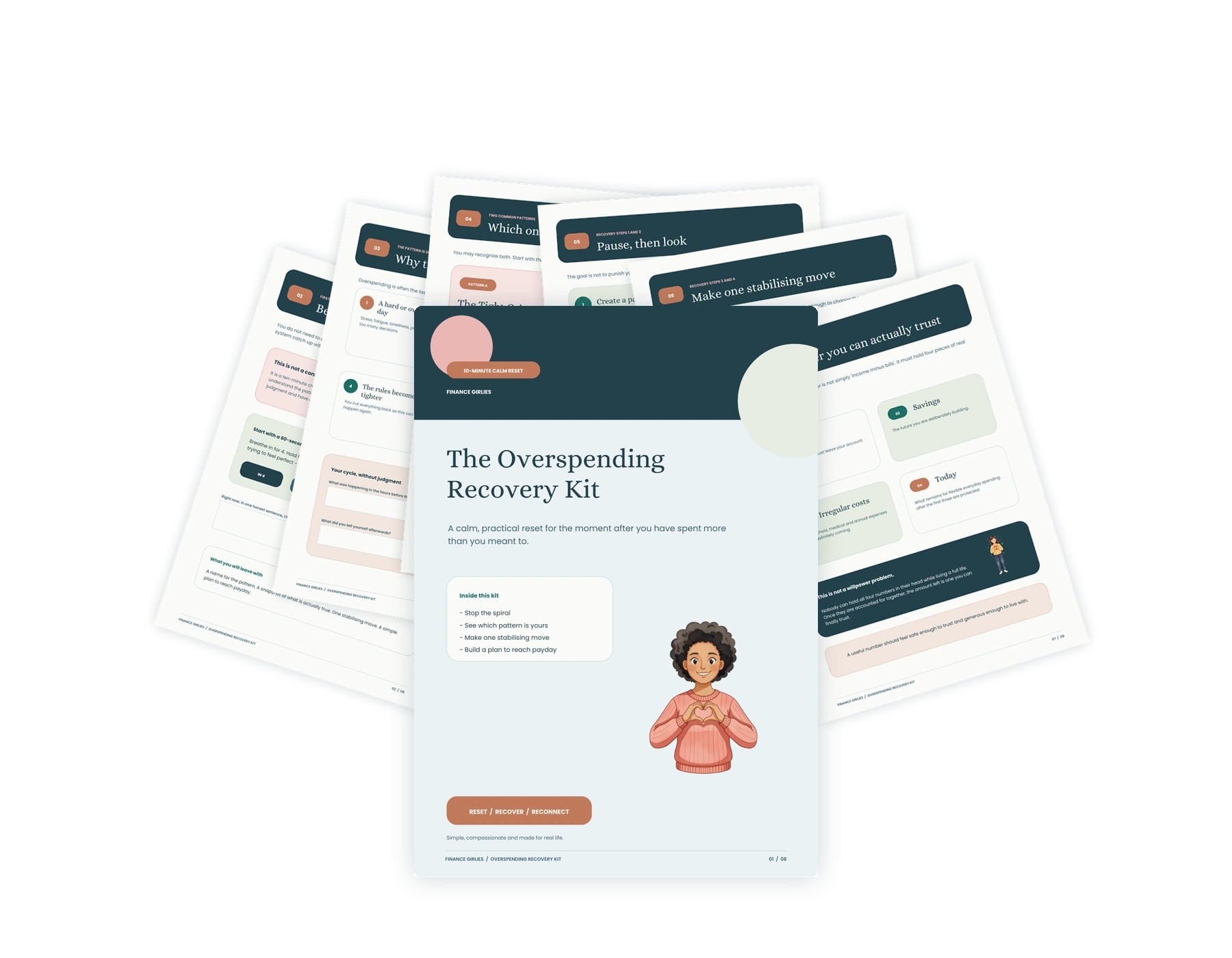
If a cart has already turned into a charge, the free Overspending Recovery Kit is the page for the day after. It starts with one page for your balance, the bills due before your next payday and one thing to do about it, and it takes about ten minutes.
Get the free Overspending Recovery KitFree. Eight pages, on screen or printed.As for the thing in the cart at 10:47pm, it'll still be there in the morning. Have a look at it over breakfast, and if it's still a yes, pay for it out of your fun money and love every minute of it.

This is general education, not legal, tax or financial advice.
5 Comments
Comments are closed.