

Moving out on your own? Welcome to the land of freedom, independence… and realising how expensive everything actually is. Rent, utilities, groceries, WiFi, insurance—when you’re the only one footing the bill, every dollar has to stretch further. There’s no roommate to split the cost of takeout or a partner to help cover unexpected expenses.
But here’s the good news: Living solo doesn’t mean financial stress has to rule your life. With a little planning and a few smart money moves, you can thrive on a single income, avoid financial surprises, and build financial security—all while still enjoying your life.
Let’s jump in.
Step 1: Get Clear on the True Cost of Living Alone
When you’re living solo, the financial reality can hit hard—especially if you’ve never had to cover everything on your own before. Many costs that are split in shared households now rest solely on your shoulders.
Hidden Expenses to Watch For:
💡 Utility Bills – Heating, cooling, water, electricity—all higher when it’s just you.
💡 Groceries – No cost-sharing on bulk buys or meal prep.
💡 Subscription Overload – Streaming services, fitness apps, cloud storage—it adds up fast!
💡 Furniture & Household Supplies – Beds, kitchenware, cleaning products—starting from scratch is pricey.
💡 Emergency Repairs – If your fridge breaks or your car dies, there’s no one to split the cost.
💡 Healthcare Costs – No shared insurance benefits; out-of-pocket costs can be high.
💡 Finance Girlies Tip: Track your first three months of solo living expenses. This will show you where your money actually goes (and where you might be overspending).
Step 2: Set Money Goals That Keep You Focused
Budgeting is way easier when you have a clear goal—otherwise, it can feel like you’re just trying to survive month-to-month.
🎯 Emergency Fund First – Aim for 3-6 months of living expenses to cover surprises.
🎯 Future Goals – Want to travel? Buy a home? Upgrade your car? Define what financial success looks like for you.
🎯 Debt-Free Mindset – Living alone means no backup plan—reducing debt gives you flexibility and peace of mind.
Break Big Goals into Small Wins:
✔ Instead of “Save $5,000,” aim for “Save $500 in three months.”
✔ Instead of “Get out of debt,” start with “Pay an extra $50 on my credit card this month.”
Small steps = momentum.
Step 3: Build a Budget That Stretches Your Money Further
A budget isn’t about cutting out fun—it’s about making sure your money is working for YOU.
How to Make Every Dollar Count:
📌 Cover Your Essentials First – Rent, utilities, groceries, transport—these get top priority.
📌 Plan for the “One-Time” Expenses – Think annual fees, car rego, medical checkups.
📌 Embrace the “Fun Money” Rule – Give yourself a set amount for treats so you don’t feel deprived.
📌 Budget for Big Purchases in Advance – Need a laptop? Moving soon? Start saving NOW so it’s not a last-minute scramble.
💡 Try This: The 50/30/20 Rule – 50% for needs, 30% for wants, 20% for savings/debt payoff. But adjust it to fit your lifestyle.
Step 4: Smart Hacks to Make Your Solo Budget Go Further
With one income covering everything, you need to make smart money choices. Here’s how to live well without overspending:

Housing Hacks to Save on Rent & Utilities
🏡 Negotiate Rent – Ask your landlord for a discount for early payment or signing a longer lease.
🏡 Find a Cheaper Alternative – Could you downsize or move slightly outside the city to cut rent?
🏡 Reduce Power Costs – Switch to energy-efficient bulbs, unplug electronics, and wash clothes in cold water.
🏡 Sublet Your Place When Traveling – If your lease allows, Airbnb or rent out your place when you’re away.
Grocery & Food Savings When Shopping for One
🥗 Meal Plan & Batch Cook – Avoid food waste by cooking in bulk and freezing portions.
🥗 Buy “Lonely” Produce – Discounted fruit/veg that’s slightly imperfect but totally fine to eat.
🥗 Split Bulk Buys – Team up with friends to buy warehouse-size groceries at a discount.
🥗 Use Cashback & Coupon Apps – Cashrewards, ShopBack, Rakuten, Honey, and supermarket rewards programs = instant savings.
Entertainment & Lifestyle Without Breaking the Bank
🎬 Skip Paid Streaming & Rotate Free Trials – One month on Netflix, one month on Disney+, etc.
🎬 Free Fun – Check local events, museums, outdoor movie nights, and free fitness classes.
🎬 DIY Self-Care – Instead of expensive spa days, learn to do your own facials, manicures, and hair treatments.
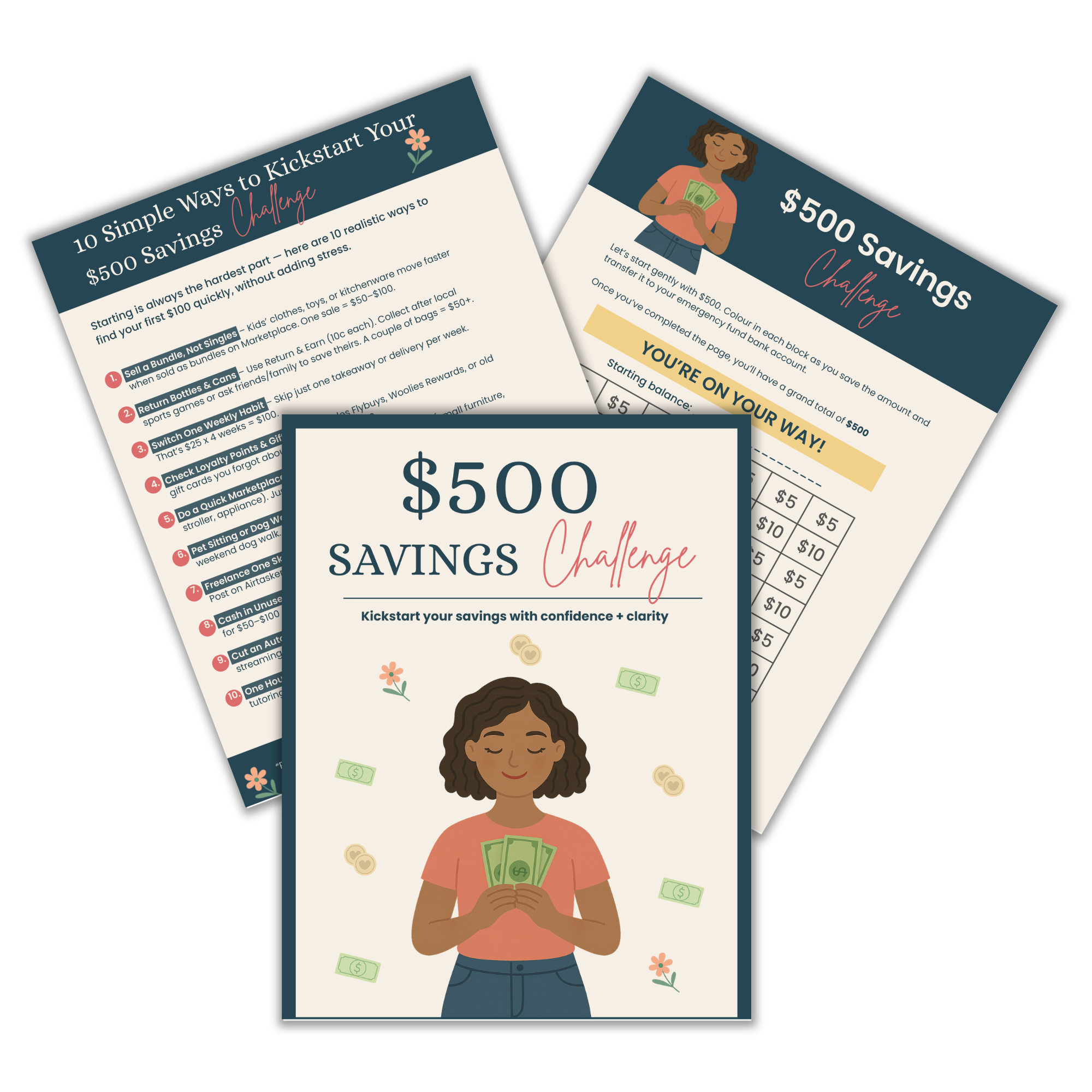
Ready to save your first $500?
Grab the free $500 Savings Challenge and start stacking small, doable savings wins — without cutting out everything you love.
- Visual tracker to see your progress build
- Easy, realistic mini savings ideas
- A simple system that actually feels achievable
💡 Mindset Shift: Being budget-conscious doesn’t mean missing out—it means spending smarter.
Step 5: Build Your Financial Safety Net
When you live alone, your emergency fund is your best friend. No splitting surprise expenses with a partner, no one else to cover you—this is your financial security.
How to Start & Grow Your Emergency Fund:
💵 First Goal: Save at least $500-$1,000 for small emergencies.
💵 Long-Term Goal: 3-6 months of living expenses.
💵 Automate Savings: Set up an auto-transfer every payday so saving is effortless.
💵 Keep It Separate: Store it in a high-interest savings account so it grows.
🚀 Future You Will Thank You: Having savings means less stress and more financial freedom.

Step 6: Make Your Money Work for You (Beyond Just Budgeting)
Once you’ve nailed budgeting and saving, it’s time to level up.
📈 Start Investing – Even small amounts in micro-investing apps like Raiz or Spaceship can build wealth over time.
🏡 Think Long-Term – Want to own property? Retire early? The earlier you start planning, the easier it is.
📖 Keep Learning – Money confidence comes from knowledge—read finance books, listen to podcasts, and follow Finance Girlies.
Final Thoughts: You’ve Got This!
Living alone doesn’t have to mean financial stress. With a little planning and smart spending, you can thrive financially, enjoy your independence, and still save for the future.
💖 Your Next Steps:
✅ Track your first three months of solo living expenses.
✅ Set a realistic savings goal and automate it.
✅ Look for ways to cut costs and make your money go further.
✅ Keep learning and building financial confidence.
💡 What’s one money move you’re making this month? Drop it in the comments—We’d love to cheer you on! 🎉
Want to Take the Next Step With Your Money?
Download the free $500 Savings Challenge and start saving with tiny, realistic wins you can feel proud of.
